

My name is Sung Joo Park and I am currently a 5th year student at the school of Pharmacy at Rutgers University. I’ve always had an interest in computer science and I’m very excited to take my very first computer science class ever!
For this assignment, I analyzed the contraceptive methods in Indonesia for my assignment. I thought the application of this data was interesting because the purpose was to be able to predict a woman’s contraceptive choice given her background such as education level, standard of living, age, religion, etc.
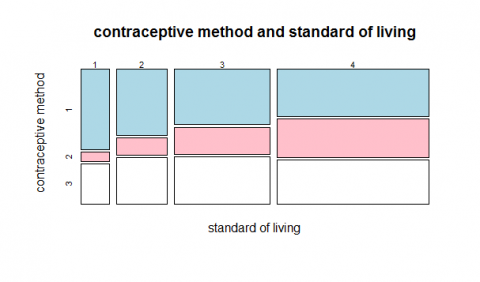
I found that education level of both husband and wife correlates with higher use of a contraceptive method, whether it’s short term or long term. Neither husbands nor wife’s level of education correlate more strongly to use of contraceptive from what I can see from these graphs. Higher standard of living also correlates with the use of contraceptives but whether short term or long term methods were used does not seem to be impacted. (1=lowest level of education/standard of living, 4= highest, for contraceptive method, 1 = no contraceptive, 2 = long term contraceptive, 3= short term contraceptive)
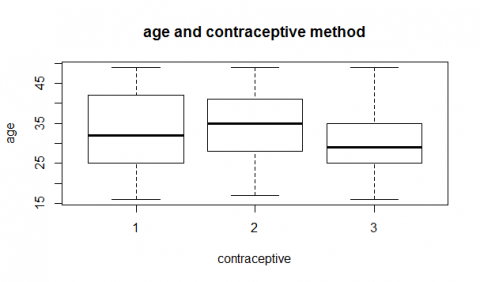
Mother’s age and previous number of children were other factors I looked into because that could potentially impact a woman’s decision to use contraceptives. However, age does not seem to have an impact. From the graphs, you can see an interesting trend that younger mothers (<35 years) prefer short term contraceptives, and the median age of women who do not use contraception is slightly lower than those who do.
This data was very interesting for me to analyze and there were many other attributes I would have liked to look into, but I only picked a few interesting points. I think that this analysis can be improved by calculating a value that will reveal the strength each correlation.
URL: https://archive.ics.uci.edu/ml/machine-learning-databases/cmc/cmc.data